Having done a lot of research on this situation I am encouraged to be able to take a more balanced view on the plight of our planets animal resources than my view of the plight of our planet
There are many encouraging signs that the massive drive by organisations like the World Wildlife Fund, International Union for Conservation and Nature and human beings in general are stemming the tide of declining animal population numbers and of possible extinctions
As always human encroachment, loss of habitat, poaching, hunting, deforestation and climate change still are the main contributors to their plight
According to Joshua Hill of Planetsave “Prompt and stringent action to reduce greenhouse gas emissions globally would reduce these biodiversity losses by 60 per cent if global emissions peak in 2016, or by 40 per cent if emissions peak in 2030, showing that early action is very beneficial. This will both reduce the amount of climate change and also slow climate change down, making it easier for species and humans to adapt.”
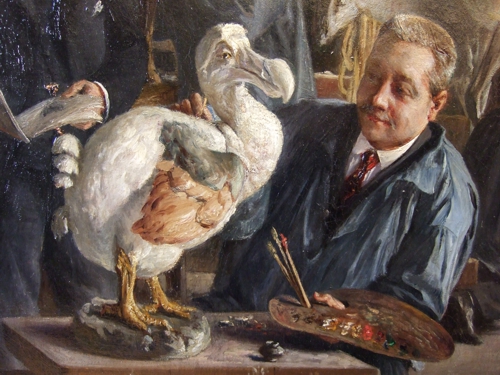
Painting by Jardin des Plantes only a painting will capture an image of a ‘dodo’ as the last recorded sighting was 1665 and is the first recognition of human involvement in the disappearance of a species
The dodo is often used as a symbol of extinction and obsolescence. The first recorded mention was by Dutch sailors in 1598. In the following years, the bird was hunted by sailors, their domesticated animals, and invasive species introduced during that time. The last widely accepted sighting of a dodo was in 1662. The extinction of the dodo within less than a century of its discovery called attention to the previously un-recognised problem of human involvement in the disappearance of an entire species. It is frequently used as a mascot on Mauritius

Tabulation of categories taken from the IUCA Red List document
Definition: Taxon, plural Taxa, any unit used in the science of biological classification, or taxonomy.
The ‘International Union for Conservation and Nature’ (IUCN) categories, with examples of animals classified by them, include:
Extinct (EX)
A species is extinct when the last existing member dies. Extinction therefore becomes a certainty when there are no surviving individuals that can reproduce and create a new generation
A species may become functionally extinct when only a handful of individuals survive, which cannot reproduce due to poor health, age, sparse distribution over a large range, a lack of individuals of both sexes (in sexually reproducing species), or other reasons
Pinpointing the extinction (or pseudoextinction) of a species requires a clear definition of that species. If it is to be declared extinct, the species in question must be uniquely distinguishable from any ancestor or daughter species, and from any other closely related species. Extinction of a species (or replacement by a daughter species) plays a key role in the punctuated equilibrium hypothesis of Stephen Jay Gould and Niles Eldredge
In ecology, extinction is often used informally to refer to local extinction, in which a species ceases to exist in the chosen area of study, but may still exist elsewhere. This phenomenon is also known as extirpation. Local extinctions may be followed by a replacement of the species taken from other locations; wolf reintroduction is an example of this. Species which are not extinct are termed extant. Those that are extant but threatened by extinction are referred to as threatened or endangered species
Examples: aurochs, Bali tiger, blackfin cisco, Caribbean monk seal, Carolina parakeet, Caspian tiger, dodo, dusky seaside sparrow, eastern cougar, golden toad, great auk, Japanese sea lion, Javan tiger, Labrador duck, passenger pigeon, Schomburgk’s deer, Steller’s sea cow, thylacine, toolache wallaby, western black rhinoceros

A ‘Caspian tiger’ you will only find, very old photographs like this, of this guy, but wait a minute, he might not have been the last of his kind
The last Caspian tiger Panthera tigris virgata was glimpsed in 1958, in Tigrovaya Balka Nature Reserve in Tajikistan close to the Afghan border where the Vakhsh River and the Panj River join to form the Amu Darya river, although this is a matter of debate, as the legendary final wild Caspian tiger is said to have been killed in February, 1970, in Hakkari Province, Turkey. Panthera tigris virgata was extinct. Or was it? According to Carlos Driscoll World Wide Fund for Nature (WWF) Chair in Conservation Genetics at the Wildlife Institute of India. He and his colleagues compared the preserved tigers’ DNA with that of living Amur tigers which is the Siberian tiger Panthera tigris altaica. Caspian and Siberian tigers turned out to be one and the same, “The tigers are too closely related to be a separate subspecies.” Declaring the Caspian tiger extinct, he says, may have been a bit premature. These findings, however, raise the possibility of repopulating a now tiger-less Central Asia with Siberian tigers, according to Igor Chestin, CEO of WWF-Russia “In the right habitat,” he believes, “the Caspian tiger’s former range is open to the reintroduction of Amur tigers.”
Extinct in the wild (EW)
Captive individuals survive, but there is no free-living, natural population
A species is extinct in the wild (EW) when it is known only to survive in cultivation, in captivity or as a naturalized population (or populations) well outside the past range. It is presumed Extinct in the Wild when exhaustive surveys in known and/or expected habitat, at appropriate times (diurnal, seasonal, annual), throughout its historic range have failed to record an individual. Surveys should be over a time frame appropriate to the taxon’s life cycle and life form.
Examples: Barbary lion, Hawaiian crow, Père David’s deer, scimitar horned oryx, Socorro dove, Wyoming toad
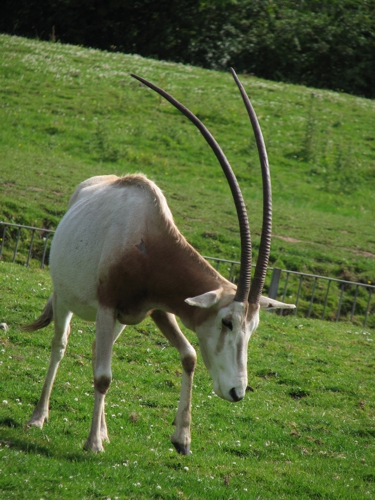
Could be gone pretty soon this ‘scimitar (horned) oryx’. there are Australians at Werribee Open Range Zoo and many other zoo’s and private concerns breeding them in captivity
Scimitar-horned oryx were once widespread in North Africa but the species is now classed as ‘extinct in the wild’ by the International Union for Conservation of Nature and Natural Resources (on the IUCN ‘red list’).
There has been a long-term decline in numbers because of climate changes (excessive drought), uncontrolled hunting by people, agricultural encroachment on their habitat, and excessive grazing of limited vegetation by domestic livestock.
There have not been any confirmed sightings of scimitar-horned oryx in the wild for over 20 years, although perhaps as many as 9000 animals survive in zoos, safari parks, ranches and public holdings around the world, along with some small populations reintroduced to Tunisia and Morocco in fenced, protected areas.
Werribee Open Range Zoo is part of an international breeding program to help save this species from extinction.
The Pinta Island tortoise (Geochelone nigra abingdoni) had only one living individual, named ‘Lonesome George’, until his death in June 2012. These tortoises were believed to be entirely extinct in the mid-20th century, until Hungarian malacologist József Vágvölgyi spotted Lonesome George on the Galapagos island of Pinta on 1 December 1971. Since then, Lonesome George has been a powerful symbol for conservation efforts in general and for the Galapagos Islands in particular. With his death on 24 June 2012, the subspecies is again believed to be extinct. With the discovery of 17 hybrid Pinta tortoises located at nearby Wolf Volcano a plan has been made to attempt to breed the subspecies back into a pure state. If successful, this would be the first time a species has been recovered from having been declared extinct
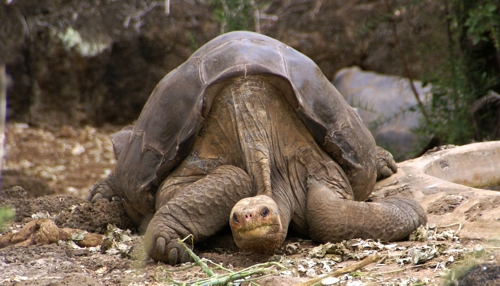
The Pinta Island tortoise ‘Lonesome George’ he was the last of his kind but there may be some hope of a Galapagos comeback
Critically endangered (CR)
Faces an extremely high risk of extinction in the immediate future
To be defined as critically endangered in the Red List, a species must meet any of the following criteria (“3G/10Y” signifies three generations or ten years—whichever is longer—over a maximum of 100 years; “MI” signifies Mature Individuals):
Occurring over less than 100 km² and two of:
Severe habitat fragmentation or existing at just one location
Decline in extent of occurrence, area of occupancy, area/extent/quality of habitat, number of locations/sub-populations, or amount of MI
Extreme fluctuations in extent of occurrence, area of occupancy, number of locations/sub-populations, or amount of MI
As above, but less than 10 km² (used to show differing levels of severity)
Declining population of less than 250 MI and either:
A decline of 25% over 3 generations or 10 years;
Extreme fluctuations, or over 90% of MI in a single sub-population, or no more than 50 MI in any one sub-population
Numbers less than 50 MI
At least 50% chance of going Extinct in the Wild over 3 generations or 10 years
or when the best available evidence indicates that it meets any of the criteria A to E for Critically Endangered (see Section V) in the IUCN Red List categories and criteria , and it is therefore considered to be facing an extremely high risk of extinction in the wild.
Examples: addax, African wild ass, Alabama cavefish, Amur leopard, Arakan forest turtle, Asiatic cheetah, axolotl, Bactrian camel, black rhino, blue-throated macaw, Brazilian merganser, brown spider monkey, California condor, Chinese alligator, Chinese giant salamander, gharial, Hawaiian monk seal, Javan rhino, kakapo, Leadbeater’s possum, Mediterranean monk seal, mountain gorilla, northern hairy-nosed wombat, Philippine eagle, red wolf, saiga, Siamese crocodile, Malayan tiger, Spix’s macaw, southern bluefin tuna, South China tiger, Sumatran orangutan, Sumatran rhinoceros, Sumatran tiger, vaquita, Yangtze river dolphin, northern white rhinoceros, hawksbill sea turtle, Kemp’s ridley sea turtle
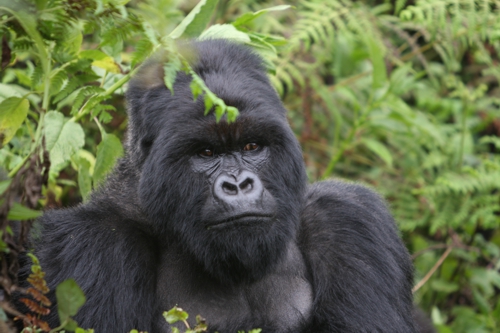
The ‘mountain gorilla’ population 880 – threats were so severe that it was once thought the species might be extinct by the end of the twentieth century. Despite ongoing civil conflict, poaching and encroaching human population, numbers of mountain gorillas have thankfully increased
| Threat | Effect on Gorilla Population | Conservation Efforts |
|---|---|---|
| Poaching |
|
|
| Habitat loss |
|
|
| Disease |
|
|
| War and unrest |
|
|
| Local communities |
|
Karisoke Research centre has:
|
Endangered (EN)
Faces a high risk of extinction in the near future
Reduction in population size based on any of the following:
An observed, estimated, inferred or suspected population size reduction of ≥ 70% over the last 10 years or three generations, whichever is the longer, where the causes of the reduction are clearly reversible AND understood AND ceased, based on (and specifying) any of the following:
An observed, estimated, inferred or suspected population size reduction of ≥ 50% over the last 10 years or three generations, whichever is the longer, where the reduction or its causes may not have ceased OR may not be understood OR may not be reversible
Geographic range in the form of either B1 (extent of occurrence) OR B2 (area of occupancy) OR both
Extent of occurrence estimated to be less than 5,000 km², and estimates indicating at least two of A – C
Area of occupancy estimated to be less than 500 km², and estimates indicating at least two of A – C
Population estimated to number fewer than 2,500 mature individuals and either:
An estimated continuing decline of at least 20% within five years or two generations, whichever is longer, (up to a maximum of 100 years in the future) OR
Population size estimated to number fewer than 250 mature individuals
A taxon is Endangered when the best available evidence indicates that it meets any of the criteria A to E for Endangered (see Section V) in the IUCN Red List categories and criteria, and it is therefore considered to be facing a very high risk of extinction in the wild
Quantitative analysis showing the probability of extinction in the wild is at least 20% within 20 years or five generations, whichever is the longer (up to a maximum of 100 years).
Examples: African penguin, African wild dog[a], Asian elephant, Asiatic lion, Australasian bittern, blue whale, bonobo, Bornean orangutan, common chimpanzee, dhole, eastern lowland gorilla, hispid hare, giant otter, giant panda, Goliath frog, green sea turtle, loggerhead sea turtle, Grevy’s zebra, hyacinth macaw, Humblot’s heron, Iberian lynx, Japanese crane, Japanese night heron, Lear’s macaw, Malayan tapir, markhor, Malagasy pond heron, Persian leopard, proboscis monkey, purple-faced langur, pygmy hippopotamus, red-breasted goose, Rothschild’s giraffe, snow leopard, South Andean deer, Sri Lankan elephant, takhi (near Critically Endangered) Toque macaque, Vietnamese pheasant, volcano rabbit, wild water buffalo, white-eared night heron, fishing cat, tasmanian devil
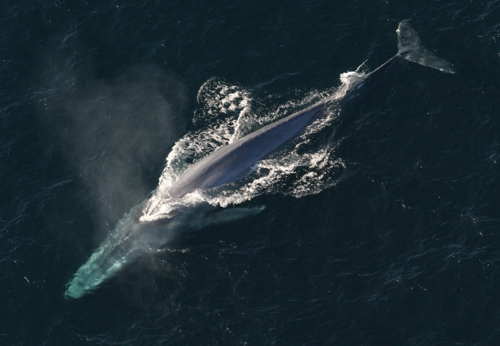
The ‘blue whale’ is the largest animal ever known to have existed imagine having 200 tonnes of meat and blubber. Certain to be an attraction to we humans
Blue whales are simply enormous with most ranging in length from 24-30 m. The largest ever recorded was a gargantuan 33.5 m long
Females are up to 10 m longer than males and they can weigh up to 200 tonnes
During the 20th century, the species was almost exterminated due to commercial whaling.
The species has slowly recovered following the global whaling ban but it remains endangered and faces a number of serious threats including ship strikes and the impact of climate change
There is one documented case in National Geographic Magazine of a blue whale being attacked by orcas off the Baja California Peninsula; although the orcas were unable to kill the animal outright during their attack, the blue whale sustained serious wounds and probably died as a result of them shortly after the attack. Up to a quarter of the blue whales identified in Baja bear scars from orca attacks
With global warming causing glaciers and permafrost to melt rapidly and allowing a large amount of fresh water to flow into the oceans, there are concerns that if the amount of fresh water in the oceans reaches a critical point, there will be a disruption in the ‘thermohaline’ circulation
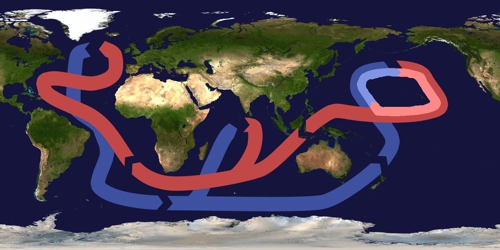
The Thermohalene Circulation patterns in our oceans
The change in ocean temperature would also affect the blue whale’s food supply. The warming trend and decreased salinity levels would cause a significant shift in krill location and abundance
Blue whales may be wounded, sometimes fatally, after colliding with ocean vessels, as well as becoming trapped or entangled in fishing gear
The ever-increasing amount of ocean noise, including sonar, drowns out the vocalizations produced by whales, which makes it harder for them to communicate and locate their food
Human threats to the potential recovery of blue whale populations also include accumulation of polychlorinated biphenyl (PCB) chemicals within the whale’s body, PCB’s cause cancer in animals and are probable human carcinogens
Vulnerable (VU)
Faces a high risk of endangerment in the medium term
is Vulnerable when it is not Critically Endangered or Endangered but is facing a high risk of extinction in the wild in the medium-term future, as defined by any of the following criteria:
An observed, estimated, inferred or suspected reduction of at least 20% over the last 10 years or three generations, whichever is the longer, based on (and specifying) any of the following:
A reduction of at least 20%, projected or suspected to be met within the next ten years or three generations, whichever is the longer, based on (and specifying) any of the above
Extent of occurrence estimated to be less than 20,000 km2 or area of occupancy estimated to be less than 2000 km2, and estimates indicating any two of the following:
Population estimated to number fewer than 10,000 mature individuals and either:
Population very small or restricted in the form of either of the following:
Population estimated to number less than 1000 mature individuals
Population is characterised by an acute restriction in its area of occupancy (typically less than 100 km2) or in the number of locations (typically less than five). Such a taxon would thus be prone to the effects of human activities (or stochastic events whose impact is increased by human activities) within a very short period of time in an unforeseeable future, and is thus capable of becoming
Critically Endangered or even Extinct in a very short period
Quantitative analysis showing the probability of extinction in the wild is at least 10% within 100 years.
A taxon is Vulnerable when the best available evidence indicates that it meets any of the criteria A to E for Vulnerable (see Section V) in the IUCN Red List categories and criteria, and it is therefore considered to be facing a high risk of extinction in the wild.
Examples: African grey parrot, African bush elephant, African lion, American paddlefish, common carp, clouded leopard, cheetah[c], dugong, Far Eastern curlew, fossa, Galapagos tortoise, gaur, blue-eyed cockatoo, golden hamster, whale shark, hippopotamus, Humboldt penguin, Indian rhinoceros, Komodo dragon, lesser white-fronted goose, mandrill, maned sloth, mountain zebra, polar bear, red panda, sloth bear, takin, yak, great white shark, American crocodile, dingo, king cobra

An ‘African Elephant’ sporting fairly small examples of a worldwide treasure, they are killed for far smaller tusks
An estimated over a 100 African elephants are killed each day by poachers seeking ivory, meat and body parts
In 1980, there were over 1,000,000 African elephants; today, there are less than 400,000
Wildlife hunting is big business a 2013 estimate valued the illegal poaching trade in Africa as being worth $17 billion dollars a year and growing.
Elephants are more like us than you may know. They can be gay, left-handed, have the ability to grieve and – true to reputation – have amazing memories
Of the 157 poaching related cases detected in Kenya during the period 2010-1013, less than five per cent were prosecuted and only three of those convicted were sentenced to jail
The Kenyan government in the meantime has had a complete turnaround and is participating fully in Elephant conservation in a big way
Wildlife hunting is big business, a recent 2013 estimate valued the illegal poaching trade in Africa as being worth $17 billion dollars a year and growing
Animal rights groups estimate that poachers in Africa kill between 25,000 and 35,000 elephants annually
Near-threatened (NT)
May be considered threatened in the near future
A species which has been categorised as “Near Threatened” (NT) as that which may be considered threatened with extinction in the near future, although it does not currently qualify for the threatened status. The IUCN notes the importance of re-evaluating near-threatened taxa at appropriate intervals
The rationale used for near-threatened taxa usually includes the criteria of vulnerable which are plausible or nearly met, such as reduction in numbers or range. Near-threatened species evaluated from 2001 onwards may also be ones which are dependent on conservation efforts to prevent their becoming threatened, whereas prior to this conservation-dependent species were given a separate category (“Conservation Dependent”)
Additionally, the 402 conservation-dependent taxa may also be considered near-threatened
A taxon is Near Threatened when it has been evaluated against the criteria but does not qualify for Critically Endangered, Endangered or Vulnerable now, but is close to qualifying for or is likely to qualify for a threatened category in the near future.
Examples: American bison, Asian golden cat, blue-billed duck, emperor goose, emperor penguin, Eurasian curlew, jaguar, leopard, Larch Mountain salamander, Magellanic penguin, maned wolf, narwhal, margay, montane solitary eagle, Pampas cat, Pallas’s cat, reddish egret, white rhinoceros, striped hyena, tiger shark, white eared pheasant
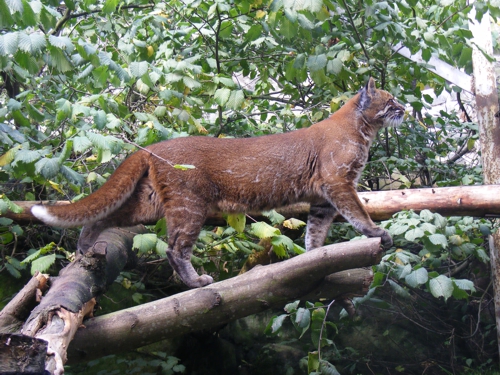
The ‘Asian golden cat’ species comes close to qualifying as Vulnerable (VU) due to hunting pressure and habitat loss, since Southeast Asian forests are undergoing the world’s fastest regional deforestation
Asian golden cats inhabit some of the fastest developing countries in the world, where they are increasingly threatened by habitat destruction following deforestation, along with a declining natural prey base
It has been reported killed in revenge for depredating livestock, including poultry but also larger animals such as sheep, goats and buffalo calves.
Asian golden cats are poached mainly for their fur and although the Asian golden cat is completely protected under Myanmar’s national legislation.
In Myanmar, 111 body parts from at least 110 individuals were observed in four markets surveyed between 1991 and 2006.
Numbers were significantly greater than those of non-threatened species.
Among the observed skins was a specimen with ocelot-like rosettes — a rare tristis form.
Three of the surveyed markets are situated on international borders with China and Thailand and cater to international buyers,
Effective implementation and enforcement of CITES (the Convention on International Trade in Endangered Species of Wild Fauna and Flora, also known as the Washington Convention)is considered inadequate.
Least concern (LC)
No immediate threat to species’ survival
A species in this group is one which has been categorized as evaluated but not qualified for any other category. As such they do not qualify as threatened, near threatened, or (prior to 2001) conservation dependent
Species cannot be assigned the Least Concern category unless they have had their population status evaluated. That is, adequate information is needed to make a direct, or indirect, assessment of its risk of extinction based on its distribution and/or population status
Since 2001 the category has had the abbreviation “LC”, following the IUCN 2001 Categories & Criteria (version 3.1). However, around 20% of least concern taxa (3261 of 15636) in the IUCN database use the code “LR/lc”, which indicates they have not been re-evaluated since 2000. Prior to 2001 “least concern” was a subcategory of the “Lower Risk” category and assigned the code “LR/lc” or (lc)
A taxon is Least Concern when it has been evaluated against the criteria and does not qualify for Critically Endangered, Endangered, Vulnerable or Near Threatened. Widespread and abundant taxa are included in this category.
Examples: American alligator, American crow, Indian peafowl, olive baboon, bald eagle, brown bear, brown rat, brown-throated sloth, Canada goose, cane toad, common wood pigeon, cougar, common frog, giraffe, grey wolf, house mouse, wolverine, human, palm cockatoo, mallard, meerkat, mute swan, platypus, red-billed quelea, red-tailed hawk, rock pigeon, scarlet macaw, southern elephant seal, milk shark, red howler monkey
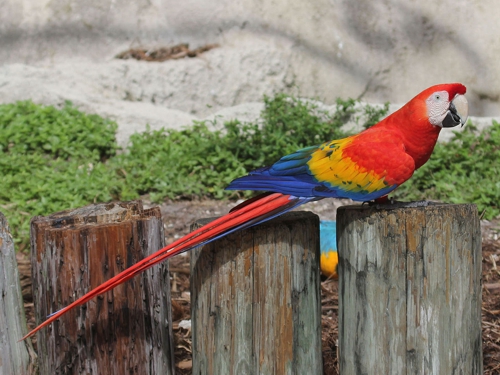
The ‘scarlet macaw’ has suffered from local extinction through habitat destruction and capture for the parrot trade, but locally it remains fairly common
DATA DEFICIENT (DD)
A taxon is Data Deficient when there is inadequate information to make a direct, or indirect, assessment of its risk of extinction based on its distribution and/or population status. A taxon in this category may be well studied, and its biology well known, but appropriate data on abundance and/or distribution are lacking. Data Deficient is therefore not a category of threat. Listing of taxa in this category indicates that more information is required and acknowledges the possibility that future research will show that threatened classification is appropriate. It is important to make positive use of whatever data are available. In many cases great care should be exercised in choosing between DD and a threatened status. If the range of a taxon is suspected to be relatively circumscribed, and a considerable period of time has elapsed since the last record of the taxon, threatened status may well be justified.
Examples: Still millions of examples too numerous to think about listing them a small percentage of them here
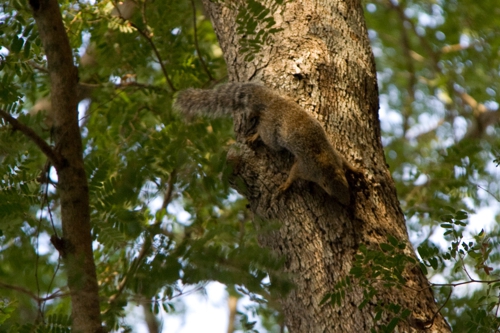
‘Zanj Sun Squirrel’ finding pictures of this little chap is probably just about as hard as it is to find data on it
NOT EVALUATED (NE)
A taxon is Not Evaluated when it has not yet been evaluated against the criteria.
Examples: Amazon tree boa, black-headed python, brown marmorated stink bug, candiru, Children’s python, Chinese high fin banded shark, clown loach, Durrell’s vontsira, dusky dwarf boa, eastern blue-tongued lizard, emerald tree boa, eyelight fish, fire skink, Florida panther, green anaconda, Hunan softshell turtle, Japanese otter, Johnston’s mangabey, Kuhl’s flying gecko, legless searsid, man-of-war fish, Mexican tetra, milkfish, Moore’s woolly lemur, New Caledonian giant gecko, North Pacific daggertooth, northern brushtail possum, northern stoplight loosejaw, ocean sunfish, Osman Hill’s mangabey, Pacific ground boa, Palawan binturong, pineapplefish, Queensland lungfish, rainbow boa, red-bellied piranha, reticulated python, Scottish wildcat, small-mouth char, southern green stink bug, splitfin flashlightfish, stoplight loosejaw, sugar ant, Tokay gecko, tomato clownfish, Uganda mangabey, Walter’s duiker,
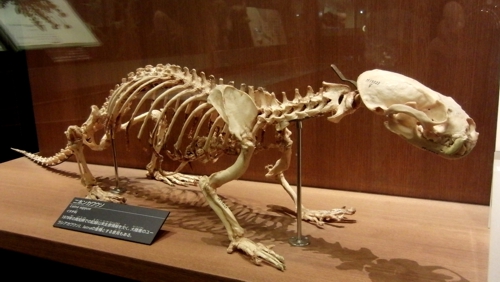
In the past, there were thousands of ‘Japanese otters’ in Japan. Now this is the only remaining evidence of them so no one actually had a chance to study them
Starting in the Meiji period, the government of Japan adopted a policy of increasing wealth and military prowess. Animal pelts thus became very valuable since they could be exported for money. As a result, Japanese river otters started to be hunted throughout the country. Their numbers soon dwindled. Populations made a slight comeback after the creation of hunting regulations.
Even so, pollution and human development then harmed their environment and resources to build their habitats. This pollution terminated their food sources in the rivers, causing them to hunt in more dangerous settings. These causes grew rapidly, unfortunately resulting in the extinction of the Japanese river otter in the late 20th century.
For the complete ‘IUCN Red List categories and criteria’, a PDF file is at your disposal, please observe and adhere to the copyright conditions set out therein
Sources: World Wildlife Fund, International Union for Conservation and Nature, National Geographic, Planetsave, the Independant, Untold Africa, Werribee Open Range Zoo and Wickipedia
Images: Wickimedia